
High Carbon Ferrochrome Production Processes
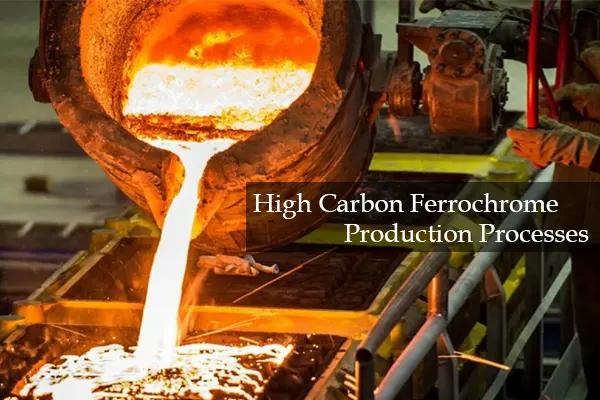
The production processes for high carbon ferrochrome mainly include the blast furnace method, electric furnace method, and molten reduction method. High carbon ferrochrome manufacturers choose different production processes based on customer orders, primarily from industries such as stainless steel, alloy steel, and casting, which have extremely high requirements for the various performance aspects of high carbon ferrochrome. In recent years, with the increasing market demand for high carbon ferrochrome, the production processes for high carbon ferrochrome have also been continuously improved and optimized. By using high-purity chrome ore, coke, and silica as raw materials and adopting advanced production and purification techniques, manufacturers can produce higher-performance high carbon ferrochrome to meet market needs.
Raw Materials for Producing High Carbon Ferrochrome
Chrome ore, coke, and silica are essential raw materials for producing high carbon ferrochrome and have a critical impact on the subsequent performance aspects of high carbon ferrochrome. XLS Metals establishes advantageous raw material mining bases, utilizing high-purity and low-impurity chrome ore as the main raw material, and using coke as a reducing agent to provide reliable heat and carbon source reserves for the reduction reactions during the production process of high carbon ferrochrome. At the same time, high-quality silica is used as a flux to adjust the composition and properties of the slag.
Different Ferrochrome Production Processes
Different ferrochrome manufacturers may choose various production processes based on specific needs, thereby producing products characterized as high carbon ferrochrome, medium carbon ferrochrome, and low carbon ferrochrome to meet market demands. The blast furnace method, electric furnace method, converter method, and molten reduction method are currently the most popular ferrochrome production processes. Through these production processes, the produced ferrochrome is widely applied across various industries:
-
Blast Furnace Method: The blast furnace method is a traditional ferrochrome production process, originally used for producing high carbon ferrochrome. This technique uses iron ore, coke, and chrome ore as raw materials and reduces and smelts them in a blast furnace. The advantages of the blast furnace method include a wide range of raw material sources and a mature process. However, it has high energy consumption, and the pollutants such as waste gases and wastewater produced are challenging to manage.
-
Electric Furnace Method: The electric furnace method is a production technique that utilizes electric energy for ferrochrome smelting. This process uses ferrosilicon, coke, and chrome ore as raw materials, melted in an electric arc furnace or submerged arc furnace. The advantages of the electric furnace method include high melting temperatures and rapid reaction speeds, resulting in high-purity ferrochrome. However, it has relatively high energy consumption and requires significant equipment investment.
-
Converter Method: The converter method is a production process that uses oxygen for ferrochrome smelting. This technique also uses ferrosilicon, coke, and chrome ore as raw materials, melted in a converter. The advantages of the converter method include the ability to achieve automated control during the smelting process and the production of high-performance high carbon ferrochrome. However, this method requires substantial equipment investment and has high raw material quality requirements.
-
Molten Reduction Method: The molten reduction method is a new type of ferrochrome production process that utilizes iron ore, coal powder, and chrome ore as raw materials, smelted in a molten reduction furnace. The advantages of the molten reduction method include lower energy consumption and easier management of pollutants such as waste gases and wastewater. However, it has a complex production process and high demands for equipment.
Sustainability of Ferrochrome Production Processes
With the development of the industry, many new sectors have started using ferrochrome as a primary production raw material, aiming to enhance product corrosion resistance, wear resistance, and lifespan. The demand for ferrochrome is increasing year by year. Some high-end product manufacturing industries have strict requirements for the performance aspects of ferrochrome, posing new challenges for ferrochrome manufacturer. As high carbon ferrochrome is in high demand, its production processes have stricter requirements. Manufacturers are continually improving raw materials and production processes for high carbon ferrochrome to produce high-performance products that meet high-end user demands. Furthermore, due to environmental considerations, ferrochrome manufacturers must also focus on improving production processes to reduce waste gases and waste residues, which may represent a long-term and ongoing challenge for them. The production processes for ferrochrome will continue to develop toward being more environmentally friendly, efficient, and energy-saving in the future.